

My first book, Young Money: A Field Guide to Wealth and Purpose in Your Twenties, is coming out on August 4th. It’s my culmination of five years of thoughts on status games, opportunity costs, and the stage-specificity of life. If you’re around my age or younger, this book is for you. If you’re around my parents’ age or older, it's a fantastic “back to school” or “welcome to the real world” gift. Pre-order your copy below:
“What’s the right publishing cadence?”
It’s a question I’ve been struggling with for the last few months since wrapping up book edits. Since 2021, I’ve published something like a million words online. A few years ago, I was publishing 2-3x per week. Then it slipped to 1x per week, then I briefly stopped entirely while I was writing my book. And my impulse, both in the “ramping up to book launch” period and, just in general, now that I’m done “writing” a book, was to get back to weekly (or more).
That impulse wasn’t misguided. Book aside (I obviously need to be promoting the hell out of my book, buy yours here), I’ve long held the belief that having a structured cadence of publishing weekly (or insert-your-cadence) is an important part of building audience trust. That line of thinking stemmed from two concerns:
*”Won’t my open rate suffer if I’m not maintaining a reliable publishing cadence?”
“It’s my obligation to have good content in your inbox every Monday.”
I now think this belief is misguided and should be discarded by 99% of folks “creating content” online.
(The exception, of course, is if you truly “write for a living,” meaning you run a media brand that you monetize through subscriptions or brand deals. If that thing is paying you money, it’s your job. And if it’s your job, then treat it as such and hit your cadence.)
Why is this misguided? Let’s look at a dating analogy. For my guys in the audience (which would be most of you), have you ever gone on a couple of dates with a chick, then you find yourself texting her too much? Extending conversations unnecessarily past their natural endings? Forcing the conversation? Every dude has been there. Myself included. It’s a critical character development arc that every young man must endure: you want to talk to the girl, so you find yourself manufacturing increasingly desperate replies to her decreasing-in-length and increasing-in-response-time texts, until she either stop responding entirely, or hits you with the HR text. Then you overanalyze each character of each of those texts like schizophrenic John Nash. (And now you can really overanalyze those texts with ChatGPT. “No, you didn’t ‘bore’ her, she simply wasn’t ready to meet you where you are!” But seriously, please don’t upload your texts to ChatGPT)
There’s no better way to bore your audience than subjecting them to unnecessary content. Want to actually keep someone’s attention? Shut up until you have something to say. There’s an inverse correlation between the volume of messages sent and the attraction you foment from your intended target.
This isn’t dating advice (though it is), it’s also content advice: if you don’t have anything useful, insightful, entertaining, or particularly novel to see, then don’t say anything. The broader “content creator industrial complex” would have you believe that you need to be posting an ever-increasing amount of content. I’ll take the opposite side of that bet. Again, this is assuming that you aren’t trying to be a full-time content creator (God bless your soul if you are; live by the brand deals, die by the brand deals), and you’re just posting for the love of the game.
Your audience will appreciate you for respecting their time by only publishing that which you deem valuable enough for their consumption. If you spare them your afterthoughts and only treat them to your best hits, they’ll read everything you write.
Here’s a few folks I read everything from:
Oliver Burkeman. Morgan Housel. Derek Sivers. Tim Urban.
Oliver Burkeman has hit my inbox six times in the last six months.
Derek Sivers has hit my inbox three times in the last six months.
Morgan Housel has hit my inbox two times in the last six months.
Tim Urban has hit my inbox two times in the last year.
These guys are all prolific writers. Burkeman’s 4,000 Weeks, Housel’s The Psychology of Money, and Sivers’ How to Live are some of my favorite non-fiction books, and I’ve saved more blog posts from Tim Urban than any writer on the internet. Seriously, Urban’s “10 Types of 30-Year-Old Single Guys,” which was hilarious to read when I was 18, is even more hilarious to read now that I’m 29 surrounded by my ever-growing cadre of Peter Pan acolytes.
But yeah, these guys are prolific. And they don’t publish all-that much. I don’t think that’s a coincidence.
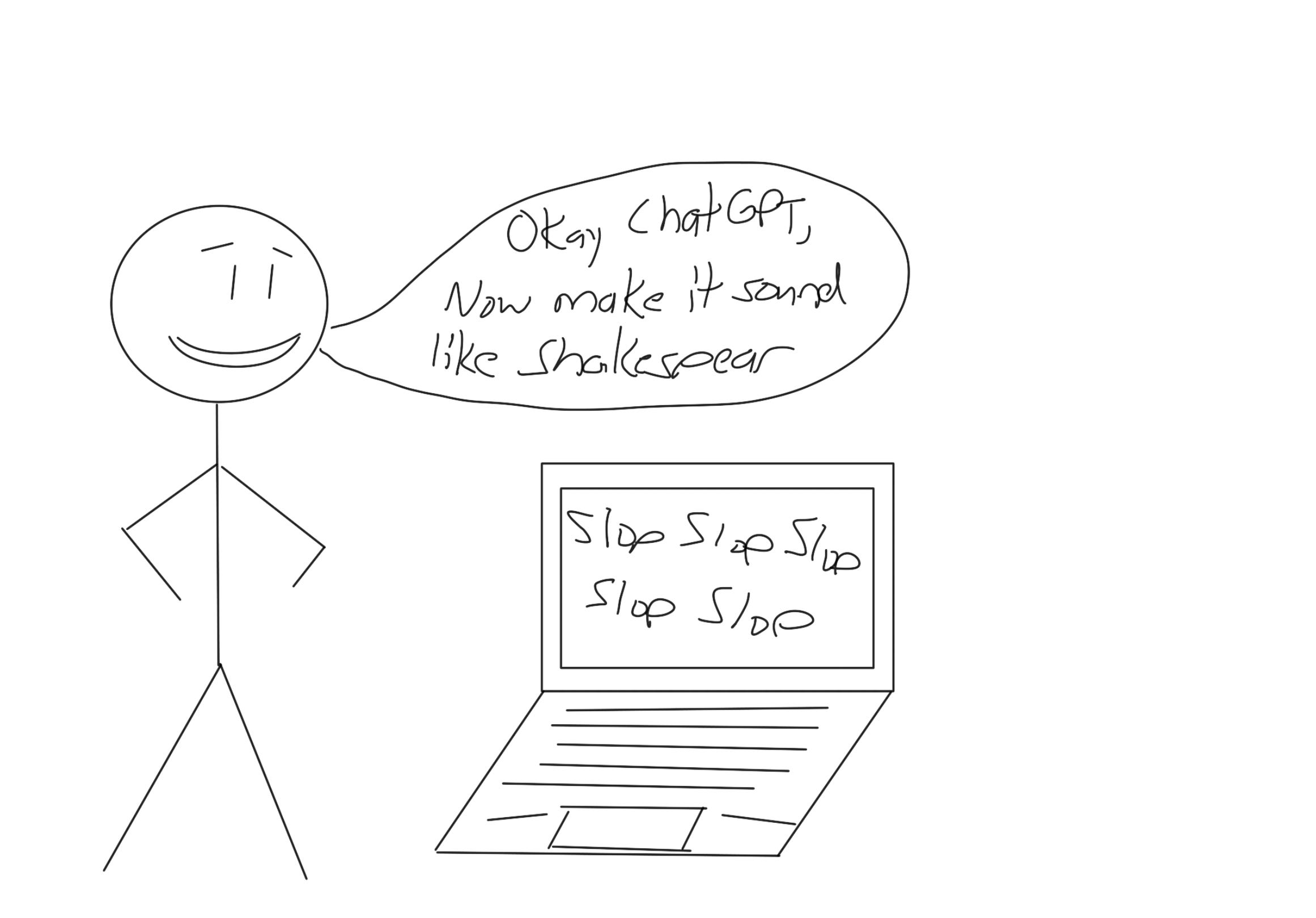
And yet, on the flip side, I’ve seen an increasing number of “writers” (a phrase which I use loosely here) go down the opposite path, churning out newsletter after newsletter each week (or quicker!), and almost all of these newsletters smell like the same type of slop. Quick hit “life advice” snippets. Lazily-aggregated links of best tweets or surface level analysis of “the current thing” in financial markets or technology.
Of course, most of these newsletters are either written by outsourced teams or artificial intelligence, because real writing (and, for the sake of this argument, high-quality curating) is both difficult and time intensive. The above-mentioned New York Times best-selling authors can hardly churn out one blog post per month at best, and now we have a crop of “neo-creators” churning out weekly brain rot in my inbox and on my timelines for the sake of “building a brand” or selling another ad slot.
After reflecting a bit on my own reading habits, I realized that there’s virtually 0 newsletters that I read daily, and few, if any, that I read weekly. I just don’t have time. Usually, on the weekends, I’ll skim subject lines for interesting topics from names I trust and catch up on the most interesting pieces from the last few days. I don’t have time to read through the barrage of content hitting my inbox now, and my bet is that you don’t either.
Here’s a novel take: the internet needs less content, not more. I’d rather read a few blog posts a year from someone that leaves me thinking, “This person knows how to LIVE, man,” than endure the forced regular cadence of life advice slop or personal finance hacks written by someone’s team of ghost writers or a Opus 4.8 for the sake of “maintaining their content calendar.”
Yeah, sure, you can sell a few more AG1 ads, but you’re selling your credibility in the process. Your three sentence riffs hitting my inbox or populating my timeline aren’t helping anyone, you’re part of the problem! And my response will be a swift “unsubscribe”.
Again, there are exceptions, particularly on the curation side. Emily Sundberg has built a nice business off of highlighting the stories that actually matter on a daily basis, Ritholtz Wealth Management’s Tadas Viskanta’s daily business and markets roundup is usually full of gems, and Matt Levine and Byrne Hobart are just total machines putting out near-daily quality long-form content.
But there’s a whole crop of “content” which is so obviously just being produced for the sake of “publishing content.” Like, people wake up and think, “Damn, I need to hit publish on some ‘content’,” and then they hit your timeline, or worse, inbox, with some absolute slop. This was already a problem pre-AI, but since LLMs hit the scene everyone is now leveraging Claude to clean up their prose.
Anyone who uses AI to “write” under their name, and then expects someone else to read it, deserves to be lobotomized, but that’s a discussion for another day.
Of course, I know how people fall in this trap. Content used to be easy. There was less competition for eyeballs. Ad slots, particularly in newsletters, sold at a premium. Now there’s too much content, so the natural reaction to someone who feels their relative share of attention is slipping is to accelerate their velocity of content, which, of course, only exacerbates the problem. Humans have finite attention spans with an increasingly-infinite number of distractions vying for that attention. Churning out slop posts won’t help you win the attention game, it just ensures that you’ll quickly get tuned out. Kind of like triple-texting the chick after she says “hahahah”.
So back to my original question: What’s the right “cadence?”
The volume with which you can write stuff that you yourself would give a shit about reading. If you find yourself thinking, “I need to think of something to publish tomorrow,” you’re doing it wrong, and your audience will be able to tell.
The truth is that the people who have the most things worth saying, like the authors I mentioned above, hardly have time to say those very things. They’re too busy living. And that’s fine, because the internet needs less content, not more. When they hit “publish,” I know their words will be worth my time, because their history has shown they actually took the time to write something worth reading.
The right way to think about content in 2026, and this will only increase as the slopification of everything just continues, is to write a smaller number of things that really, actually matter, and then share the hell out of the few pieces that actually move the needle.
I was talking to my buddy George Mack about this the other day. Direct quote from George: “I posted ‘loads of shit’ for about 10 years, and I then spent 7 months working on the High Agency piece, and that, I published it almost a year ago, I still get dozens of emails and DMs a day or week, and that blog post gets 10s of thousands of visitors on a weekly basis. It’s performed on a 100x of any posts combined.”
A single blog post outperformed everything else he’d written combined. Power laws rule everything around me, particularly in content.
This is, of course, also advice to myself.
As mentioned several times now, I wrote a book over the last year-and-a-half (buy yours here), and the ideas in that book on status games, opportunity costs, and the stage-specificity of life, are just so much more valuable than most-anything else I could write about right now. Instead of trying to will myself to come up with new content “for the sake of posting,” would it not be a better use of my time (and certainly yours) to focus my efforts on highlighting this one extremely important piece of work, rather than trying to speed run more “content” for the sake of content?
Probably.
Over the next couple of months, I’ll be highlighting some of the ideas from this book, because I think the ideas in this book matter so much more than anything else I could be writing about at the moment, but after the launch, I’m going to focus much less on publishing “cadence,” and more on “quality.”
Good writing takes time, particularly now, when I’m 10x busier than I was a few years ago. Two blogs a week was easy when I was spending my time vagabonding around Europe. It’s a bit harder now when I’m gainfully employed and busier than ever. There’s plenty of other folks out there more than happy to ship some slop to your inbox to sell a few more AG1 ads.
I’ll try my best to wait until I have something entertaining (or, more rarely, useful) for you. Though my book is a good start.
- Jack
My first book, Young Money: A Field Guide to Wealth and Purpose in Your Twenties, is coming out on August 4th. It’s my culmination of five years of thoughts on status games, opportunity costs, and the stage-specificity of life. If you’re around my age or younger, this book is for you. If you’re around my parents’ age or older, it’s a fantastic “back to school” or “welcome to the real world” gift. Pre-order your copy below:
100% agree with this. I've noticed the same thing. Kudos to those who churn out content week in week out and don't get paid for doing so, because they're better than me. Quality over quantity has always been the way, and I want to respect my subscribers' time so I try not to fill their inboxes with random content.
As someone who's been writing for about 1 year, and whose content errs toward long-form stuff, I aim to upload roughly once (maybe twice) a month which works better for me. Good writing and good idea generation all take time, and those who publish surface level content frequently are clearly outsourcing everything [including their thinking] to LLMs.
Great read. I can picture this getting written at 2am in a fever a la Jerry Maguire with his manifesto - The Things We Think And Do Not Say