

Welcome to Young Money! New to my blog? Join 60,000+ subscribers by adding your email address below:
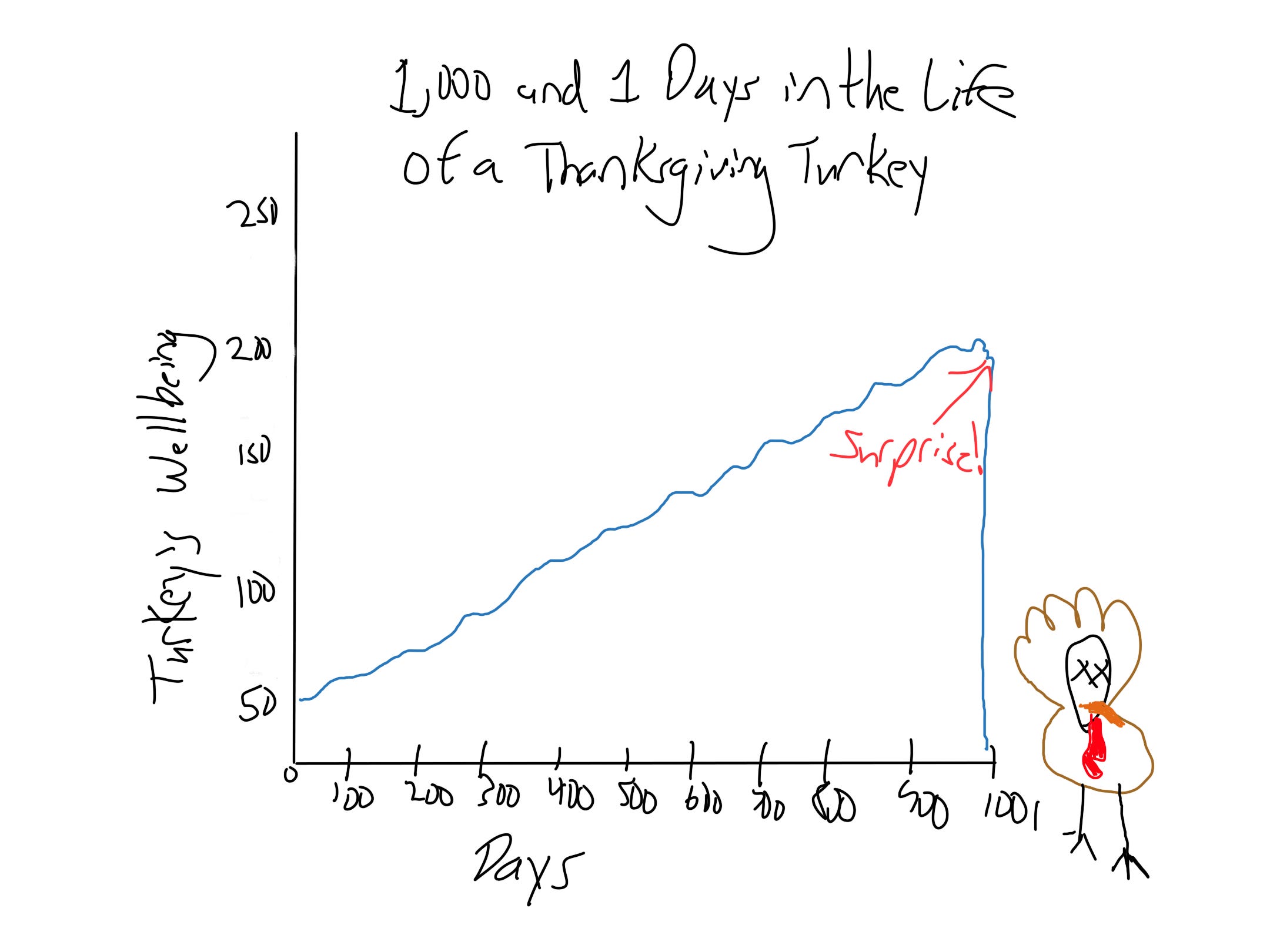
“Consider a turkey that is fed every day. Every single feeding will firm up the bird’s belief that it is the general rule of life to be fed every day by friendly members of the human race “looking out for its best interests,” as a politician would say. On the afternoon of the Wednesday before Thanksgiving, something unexpected will happen to the turkey. It will incur a revision of belief.”
-Nassim Taleb, The Black Swan
From roughly the 1980s to ~2025, there has been a “finance game” that one could play, and that “game” looked something like this:
Kill it in high school, pick your choice of Harvard, Yale, Princeton, Stanford, Duke, Georgetown, or “other top-25 school in a given year.”
Spend a couple of years in investment banking at Goldman Sachs, Morgan Stanley, JPMorgan, etc.
Immediately start recruiting for private equity roles (because only the losers who can’t get an exit opp stay in banking! The “buyside” is where the real
moneystatus is). Because, as we all know, the whole point of going into banking is, really, to get into private equity.Get promoted to VP in your PE fund (where you start earning some carry), pivot once again to a hedge fund (if you have some real risk appetite), or go to business school, after which you will either rejoin the PE world as a VP or join a hedge fund.
There is a “trade” you make in this career path:
You will work very long hours from your analyst through VP years, but your risk-adjusted cash compensation will be higher than almost any other “normal” job (I exclude hedge funds from this, given that there’s far more earnings volatility. But it’s very true for the banking and private equity game).
You will have a legible, “high-status” career path that plays well with the upper echelons of society.
The longer you stay in the game, the more that your “upside” is tied to your carried interest in your fund. Starting around the VP level, you’ll likely have some points of carry that vests over time. Fund does well, you make a few million down the road. Fund underperforms? Well, you can’t eat carry, can you?
Your downside risk is capped (cash comp is strong), but your upside is also somewhat capped (particularly at bigger funds, you will be allocated a fixed amount of carry, you will have to stay at that fund for a fixed amount of years for that carry to vest, and the performance of that fund is largely outside of your control)
The TLDR: “finance” appeals to a particular person who desires status but abhors risk.
The key to making this trade work was the “downside risk” being capped: funds need a certain number of young folks doing the tedious Excel work that either A) paints the picture the client wants (sellside advisory) or B) hits the IRR the managing director wants (private equity), so they will pay those young folks a lot of money to do these things. The “downside risk” remains capped as long as two things remain true:
Money continues flowing to these firms in the future, ensuring that there will be future fundraises and more dollars to go around to current and future employees.
Younger folks are needed to do the tedious Excel work through which they earn the right to be the “deal guys” over time.
From the 1980s to now, both of these have been true.
In the mid-1980s, David Swensen, the Chief Investment Officer of Yale’s endowment, transformed Yale’s investment strategy by shifting from a 60/40 stock/bond portfolio to increasing exposure to alternative assets like private equity and venture capital. His rationale? Investing in private markets would increase diversification and help the endowment capture an “illiquidity premium” (get paid more for taking illiquidity risk).
In 1988, Yale’s endowment has ~92% of its assets in public equities and bonds. By 2024, approximately half of Yale’s endowment ($20 billion of a total $41 billion) was invested in leveraged buyout (PE) funds and venture capital funds.
Over the next 30 years, other institutional investors followed Yale’s lead, with university endowments investing an average of 17.1% of assets in PE funds in 2025, up from 5.4% in 2007.
More institutional money flowing to PE —> more PE funds raising capital —> more money to go around to the employees of these PE funds. For ~30 years, private equity was high clout, high status, and high compensation, though, as with most things, the ones who really made bank were those who were early to the private equity wave (like the founders of KKR).
The issue, now, is that trend is starting to reverse.
In 2025, Yale kicked off talks to explore a secondary sale (meaning: selling some of their existing assets to other investors) of up to $6 billion of their private equity assets (later settling around ~$2.5 billion) at a discount of “less than 10%” of recent marks. The catalyst for this was the Trump administration raising taxes on endowment investment gains, costing Yale ~$300 million annually starting in July 2026. Yale needed more money, and to get that money they needed to sell assets.
Another variable exacerbating this problem has been the recent lack of liquidity in private equity. Since 2021, there has been a dearth of distributions from private equity firms (read: cash returned to investors). From 2015 to 2019, global private equity distribution rates were ~24%. Since late 2021, they have collapsed to ~9.6%.
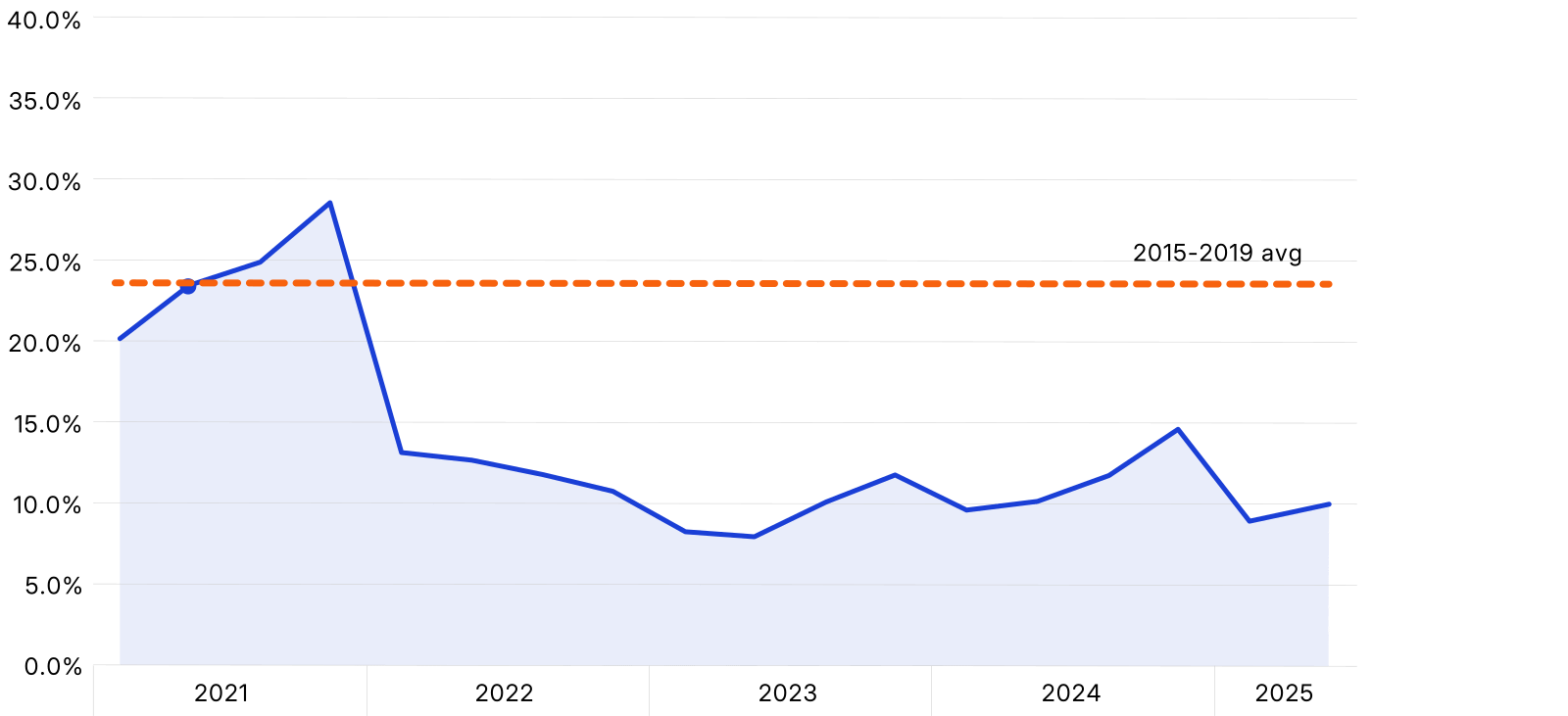
Private equity firms raise funds with the expectation that they will return capital to their investors in some timeframe (five years, seven years, etc.). They are now struggling to meet those expectations. PE investors have, of course, tried their best to explain the lack of recent cash to their limited partners (LPs) (see claims that the IPO market isn’t hot, which is hilarious considering the market digested a $75 billion IPO this summer, but I digress).
With distributions down, LPs don’t get paid. If LPs don’t get paid, they’ll start allocating less money to these PE funds in the future, because why would you invest in a manager (or asset class) that repeatedly failed to make you money? At some point, you stop, assuming that you have better places to allocate your capital.
Why are distributions down since 2021? Well, let’s look at interest rates:
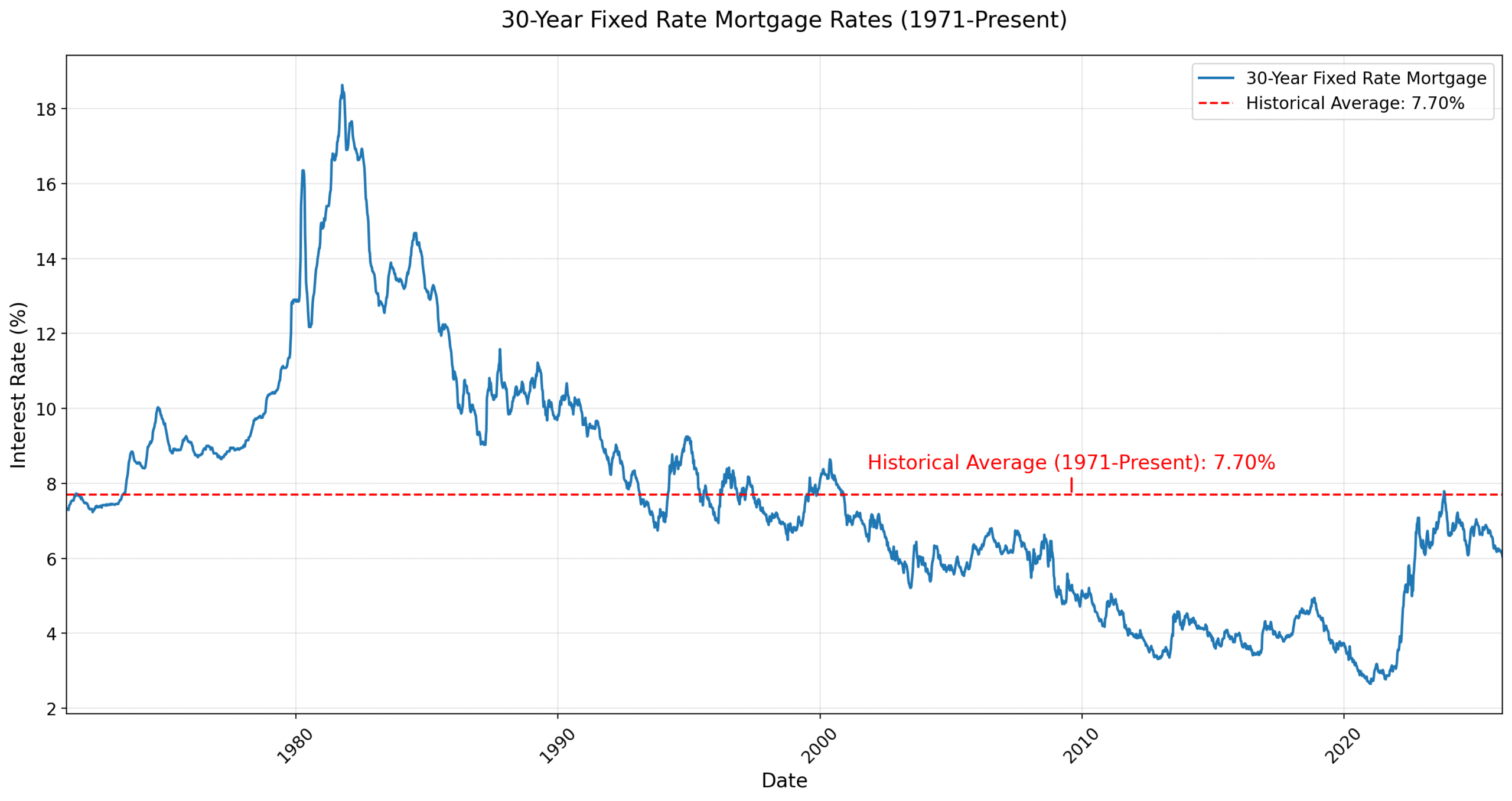
In the 1980s, when the PE boom began, interest rates were high. For ~35 years, interest rates moved in one direction: down. When interest rates drop, discount rates and refinancing rates drop. When discount rates drop, asset prices, all things equal, increase as the present value of future cash flows become more valuable. Meanwhile, new potential buyers of these assets can raise cheaper debt to buy the asset.
A hypothetical example: you buy a company for 8x EBITDA when interest rates are 9% in ~2011. That company’s revenue and profits grow in-line with GDP over five years. Interest rates drop to 5%. That company will likely benefit from multiple expansion as its future cash flows are suddenly more valuable today, AND it will be cheaper for a new buyer to raise debt to buy this asset. With minimal improvement in the business itself, you can make a lot of money by selling the markup. Maybe you can sell it for 15x EBITDA. If you can actually improve margins, even better.
In 2020, a new buyer can borrow at ~3% to buy the same company. Cheap debt, even higher valuation. The new buyer is willing to pay 22x EBITDA, as too much capital is competing for too few opportunities. The second fund sells to this new party, realizes a profit, everyone is happy. Combine the 3-decade collapse in interest rates with a broader allocator shift toward alternative investments and you have a recipe for a PE bonanza.
TLDR: The PE Boom of the last 30 years was driven by a combination of increasing institutional appetite for private market assets and a decline in interest rates.
The reverse happens when rates go up: fixed income becomes a more compelling asset class (making fundraising for other assets harder). Why keep investing in underperforming PE funds if you can get 5% on your money via fixed income?
And a lot of businesses are “worth” less than they were in 2021 because discount rates and financing rates are higher. Those outer year cash flows are suddenly worth pennies on the dollar when your money earns 4-5% in the bank. The result: zombie funds with assets marked at ~$1 billion but likely can’t fetch buyers for anywhere near that price dominate the market.
Oh, but that’s not all. A lot of these buyout targets were software companies. In case you missed it, ChatGPT dropped in Q4 2022. It’s pretty cool. And immediately following the ChatGPT-led LLM boom came the AI coding assistants.
Now we have tools like Claude Code and Codex that are really good at coding! Better than humans, in fact! A lot of the “recurring revenue” that these PE firms were modeling for some of their vertical SaaS solutions suddenly isn’t so recurring when a 24-year-old with a Zyn addiction can vibe-code their own solution at midnight. Sorry! Blue Owl! Have fun staying poor, as the kids say.
Plenty of “$1 billion” software companies in 2021 would be lucky to fetch a fraction of that price today.
The nice thing about private markets is that, while the stock prices of public SaaS companies were taken behind the barn and shot earlier this year, you can hold your marks on your private companies steady because there’s no liquid market for them. If you remove the feedback loop, the “price” can be whatever you say as long as you don’t have to sell.
Of course, at some point, if you do go to sell this asset, the market would determine the pricing, and if no one wants to buy it for $1 billion, then, well, maybe… it’s not worth $1 billion?
So, the PE industry devised its own solution: “continuation funds,” in which they raise more capital to buy their own assets from themselves, allowing existing LPs to either cash out or roll their equity. Two fun wrinkles with continuation funds are that 1) the PE funds can then continue to earn fees on an asset that, otherwise, underperformed, and 2) the PE fund sets the price of the asset, given that it’s both the buyer and seller of said asset. “Oh, the broader market doesn’t want to buy this asset at the price we think it’s worth? We’ll just buy it from ourselves at the price we like.”
This game will work, for a while, but you can only play hot potato with busted assets for so long. If valuations are, in your view, “temporarily impaired,” like in the 2020 crash or Q4 2022 tech downturn, then maybe future market conditions will give you better exit opportunities. But if a new wave of technology has rendered the now-archaic business model of your portfolio companies obsolete, then duration is just delaying the inevitable, and you’re simply charging management fees along the way. Sooner or later the assets have to “exit” or capital will flow to other assets.
TLDR: the macro picture for traditional “private equity” sucks (unless rates go down again).
However, the micro-picture, particularly at the junior level, isn’t pretty either, thanks to this same AI coding shift.
A simple but directionally correct way to think about AI models, and their development processes, is that they’ve been trained on all publicly-available data in existence to find patterns across that data. You dump the entirety of the internet in a black box, and suddenly you have this “model” that understands the English language quite well.
But then you can train these models further by dumping examples of vertical-specific data such as code (hello! Stack Overflow!), Excel models, accounting forms, legal contracts, etc, and you can create fine-tuned models that are really, really good at particular types of tasks, such as, you know, financial modeling.
The result: After ingesting God-knows-how-many banking and private equity modeling examples, Claude and ChatGPT are better at Excel modeling than you could ever hope to be. Which is pretty interesting since that’s 90% of the job of new analysts and associates.
Of course, the “edge” was never in the modeling (particularly in public markets). Banking has no “edge,” it’s a services business. The “edge” is sales. In the PE world, the “edge” is in operational excellence (or 35 years of declining interest rates). In public markets, the “edge” is variant perception, which you happen to express through a model. But the work, at least at the entry level roles, is modeling. You make Excel. You deliver Excel. If you do that long enough, you get to do the non-Excel things.
Guess what? AI can do that better than you. So we’ve now entered this weird world where, within approximately four years (2022 through 2026), the “go-to" game for smart-but-risk-averse college kids (finance) is facing some serious headwinds. I don’t expect mass layoffs that many are predicting, but I won’t be surprised to see reductions in “new hires” over time as existing firms can get more and more leverage from AI. The result: a declining number of new seats in an already cutthroat-competitive industry.
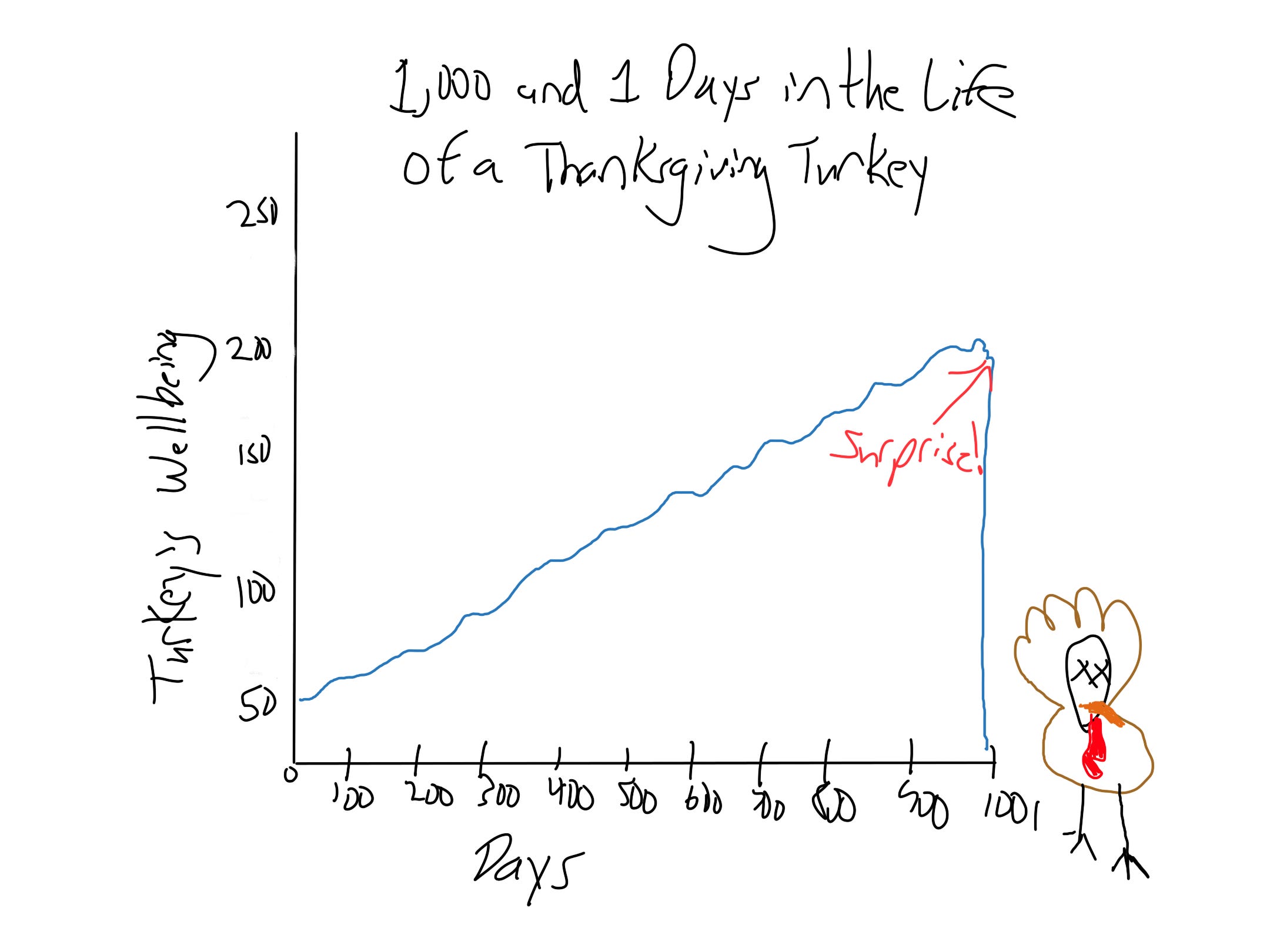
The traditional finance career path is having a turkey moment:
What does this have to do with “prestige?”
Well, private equity became the “prestige” game because, for basically 30 years, everyone who went into private equity got really rich, though most of the “riches” were reserved for the folks who got in early (mid-1980s through early 2010s), and were able to stack enough carried interest that they cashed out and made millions along the way.
Once a critical mass of folks realized that the IB —> PE game, if played correctly, meant “auto-bread,” they optimized for it. We shifted from a game where the lacrosse kids from Long Island went into finance because their older brother’s buddy went into finance to college becoming a 4-year-grindfest of modeling tests and coffee chats to try to land one of ~8 internships at the A-list banks on Wall Street, at which point you would immediately start recruiting for an Apollo / KKR / Blackstone seat before you’d even started your first day in banking. This entire career path became perfectly optimized and intensely competitive right as the risk/reward of pursuing said path started to look much more questionable:
Will PE shops struggle to raise new funds?
Will my carry ever be worth anything?
Will junior headcounts be permanently reduced thanks to AI leverage?
But every ambitious-but-uncertain kid majoring in finance is still inclined to chase these paths. Why? Because PE was a path to guaranteed money for long enough that people assumed it would always be a path to guaranteed money, making it increasingly competitive and prestigious. But prestige is a indicator of where the world went, not a forecast for where the world is going.
Independent thought is in short supply in 2026, particularly while we’re bombarded with more information than ever before. How do you figure out what to do with your life? You pattern-match to the things that worked for the folks who came before you, as they pattern-matched to the things that worked for the folks who came before them. We’re all pattern-matching monkeys.
But alpha gets extracted away over time, and the “real” money in PE came from getting in before it was obvious. Once a particular game becomes obvious, it’s closer to the tail end of its life cycle than the genesis.
The world is a dynamic, self-correcting place and the things that “were rewarded” in 2016 are not necessarily the things that will continue to “be rewarded” in 2026. Entire jobs (and careers!) are being made redundant by a tech shift at the same time that a 35-year-macro tailwind (declining interest rates) became a headwind. Any job that is “high-prestige” today might not necessarily be a good bet if the variables that led to that prestige have changed, and the world is changing faster today than it ever has before.
My $0.02: it’s never been more important to reevaluate your priors. Don’t assume that “things that have always worked” will continue to always work. Don’t be a turkey.
- Jack
I have friends working on different businesses that could provide useful services for some of you. If you want to connect with any of the following, let me know with an email reply.
Do you need help integrating AI into your business? One of my best friends from grad school spent the last 2.5 years leading AI at a well-known venture fund, and he just started his own business helping financial services firms, investment groups, and manufacturing businesses identify high-leverage opportunities to apply AI to their workflows. If you or your company is looking for help here, let me know by replying to this email.
Paper rich, cash poor, and looking to buy a house? Many founders, GPs, and early employees of hot-but-promising startups are facing a similar conundrum: they have $10m+ in paper net worth but only a fraction of that is liquid. If this is you, and you’re in “home-buying mode” (particularly in the Bay area or NYC), let me know with a reply. I might have something for you.
For my startup founders who just raised new funding and are looking for a new banking partner: Shoot me a note and I’ll connect you to my friends at Erebor; they’ll take good care of you.
My first book, Young Money: A Field Guide to Wealth and Purpose in Your Twenties, is available everywhere you buy books. I wrote 270 pages on status games, opportunity costs, and the stage-specificity of life; topics that I think are particularly timely today. If you like this newsletter, you should get your copy below:
Find this article online or have the email forwarded to you? Receive my next piece in your inbox by subscribing here:
I agree with your take on PE. I think the rise in rates also should apply to the equity market. Equities are in the long run worth the cash they will send back to shareholders. If rates go from 2 to 5 on the ten year, that has a huge effect on the present value of a given 30 year projection of cash flows, holding everything else equal. It's math.