

Welcome to Young Money! If you’re new here, you can join the tens of thousands of subscribers receiving my essays each week by adding your email below.
Hello from Geneva, Switzerland. I spent the last week skiing with a few friends in Val Thorens, France before heading back to the grind tomorrow morning (though, I guess it is now tomorrow morning, as I wrote this on Sunday). This has been the most travel-intense holiday season of my life. It’s certainly been fun (bachelor party + Indian wedding + holidays with family + ski trip with friends is a jam-packed, but very enjoyable, way to spend ~3 weeks), but I’m more than ready for a little routine again.
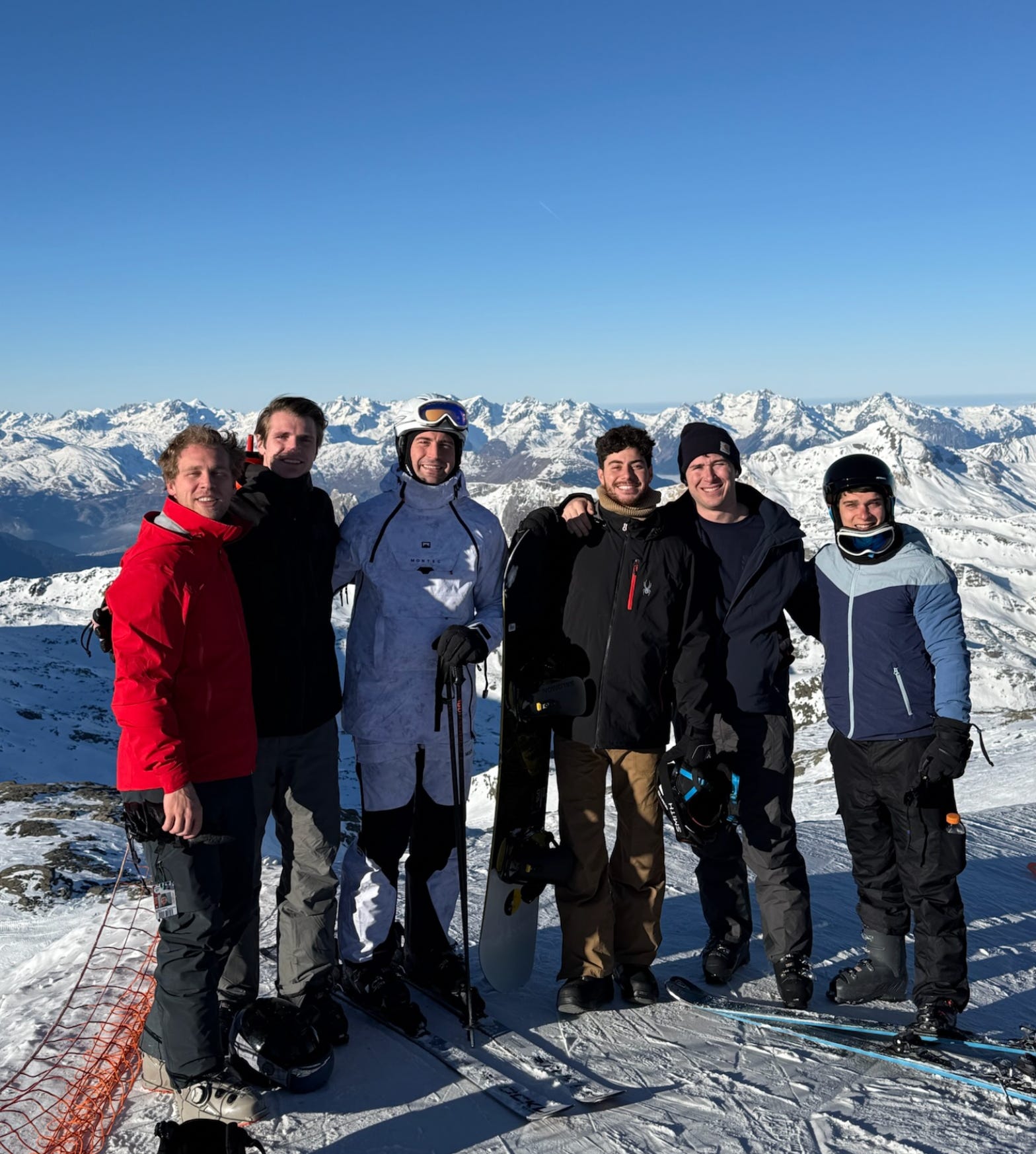
A brief review of Val Thorens: Over the last three years, I’ve taken an annual ski trip with a group of friends from New York, and, typically, we’ve headed to Colorado. However, we realized that it’s actually cheaper to ski the Alps (particularly if you don’t have an Ikon / Epic pass), even inclusive of international flights and currency exchange rates, so this year, we headed west. I skied in Europe a couple of times in business school with ~150 of my closest friends ( every business school trope you have is true), which made me the de facto trip planner for our European ski trip in 2026.
The biggest differences between skiing in Europe vs. the states:
Europe is much, much cheaper. Lift tickets were $50-$60 a day, vs. ~$200+ in Aspen or Jackson. This alone offsets any potential flight cost differences if you ski 3+ days.
If you don’t pull down the safety bar on your chair lift, the lift operators will freak out on you and pause the lift until you lower the bar.
While they take chairlift operating quite seriously (there’s literally security cameras at the lift stations that will trigger an alarm if you don’t lower your bar immediately upon sitting), basically zero parts of the mountain are roped off. Want to ski off-piste? Do your thing. If you ski off a cliff, that’s on you.
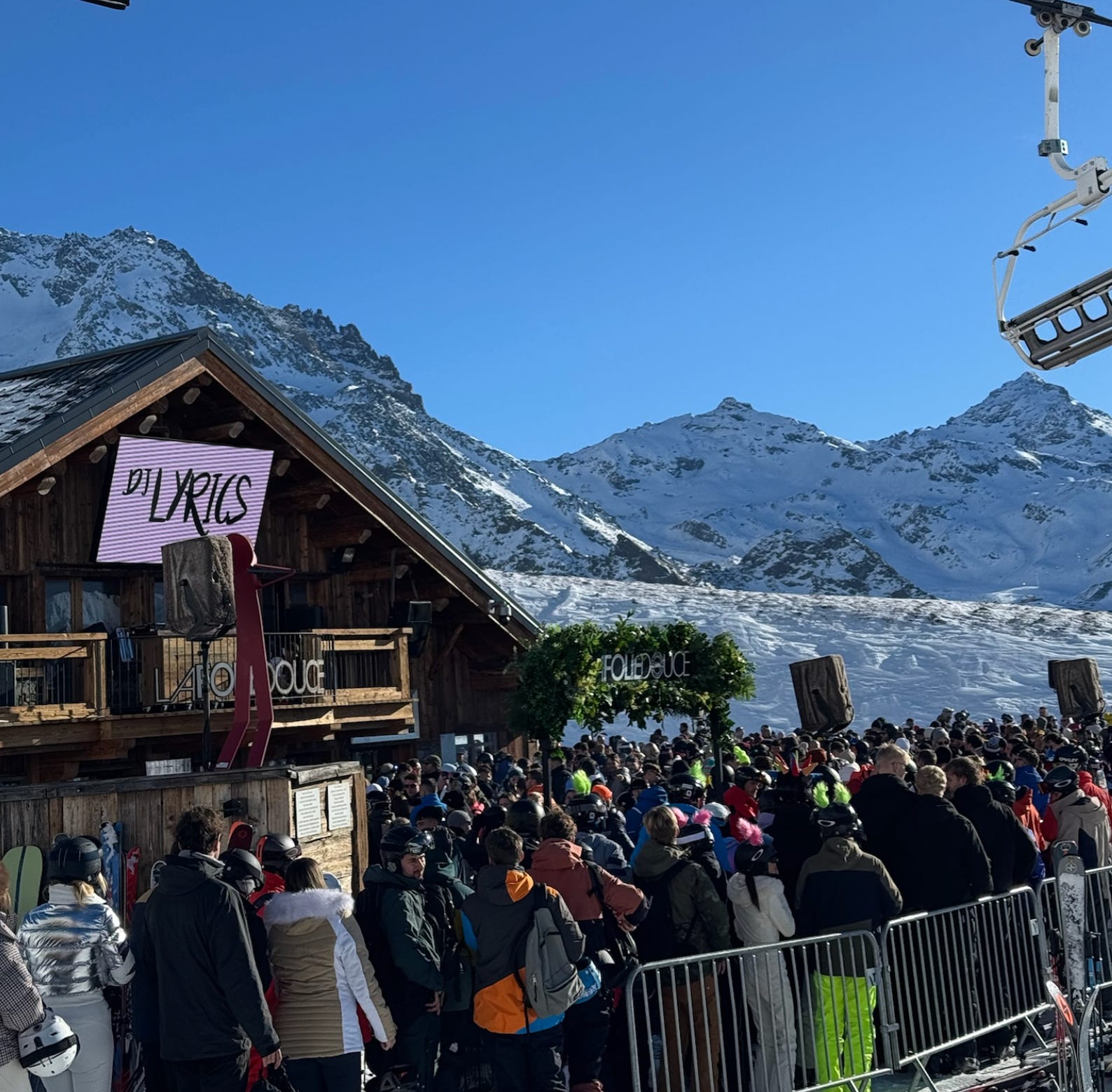
The après scene just isn’t comparable. In the states, you might grab a couple of beers in the village at the end of the day. On some slopes in France, you can throw down a full rave on the mountain before skiing back after sunset.
On this particular trip, the snow quality wasn’t great; Val Thorens almost got dumped on a few days before our arrival, but the storm just missed our destination, so it was a pretty icy outing. When I skied here two years ago, we carved up the whole mountain thanks to some fresh powder. This time around, we played Where’s Waldo? trying to find any routes with a bit of non-icy snow, with mixed results. That being said, all in all a successful trip. My only wipe out was when a French man hit an ice patch near the bottom of a run, which led to him yelling, in an impossibly French accent, “Sorry! Sorry! Sorry!” as he plowed into my right thigh as I was cutting right to head to a gondola. Solid form tackle, but no real damage. On the first run of the day, one of my buddies also lost control on an icy run and ran face first into a (padded) ski lift pole. He’s sporting a smart black eye, but, again, nothing that a few (several) Guinnesses couldn’t heal.
Also, another one of my buddies (who lives in Atlanta), who is now dating a German girl (who lives in Cologne) that he met at a hostel in Southeast Asia, happened to be skiing in Val Thorens with his new boo this week, which led to a nice impromptu reunion.
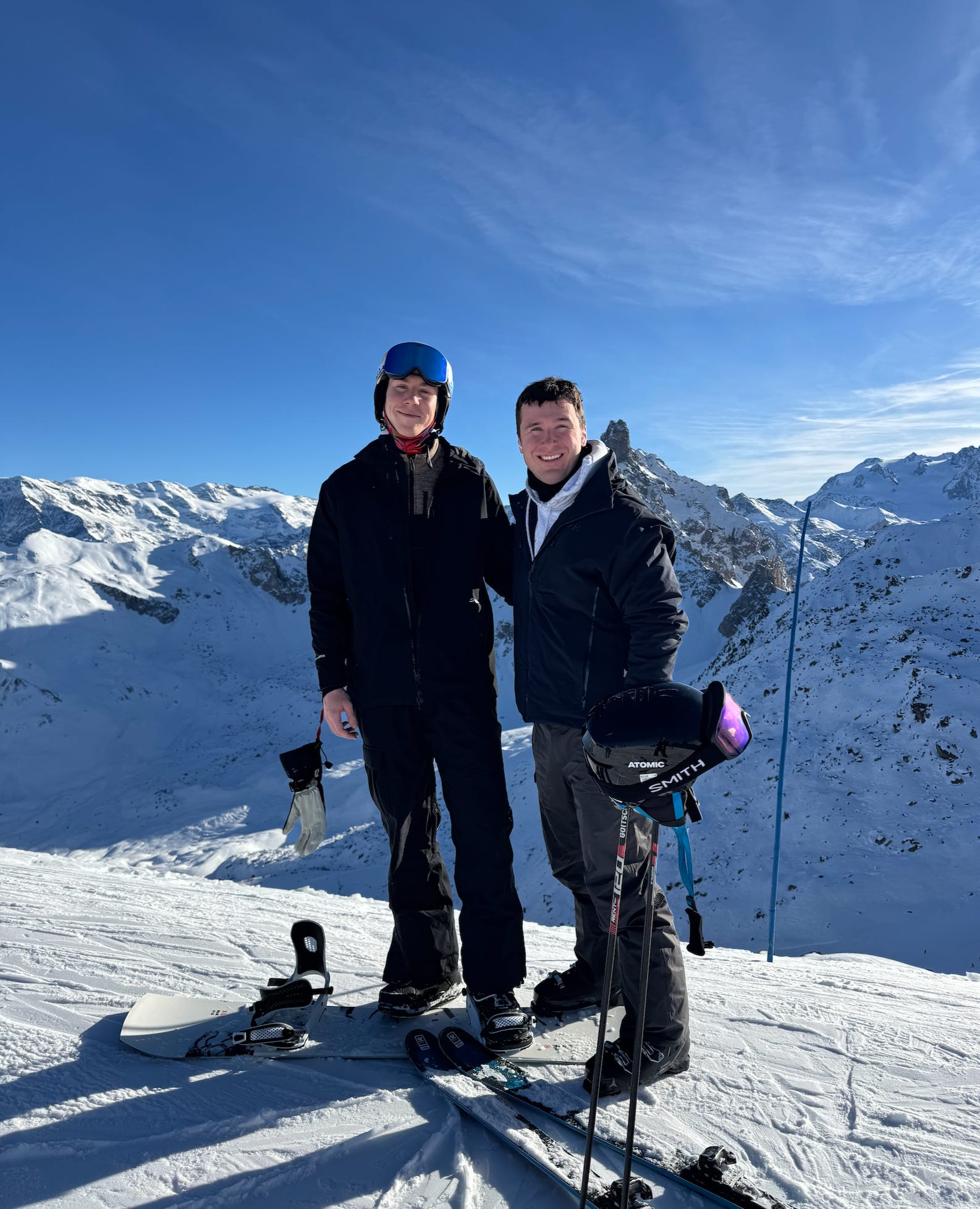
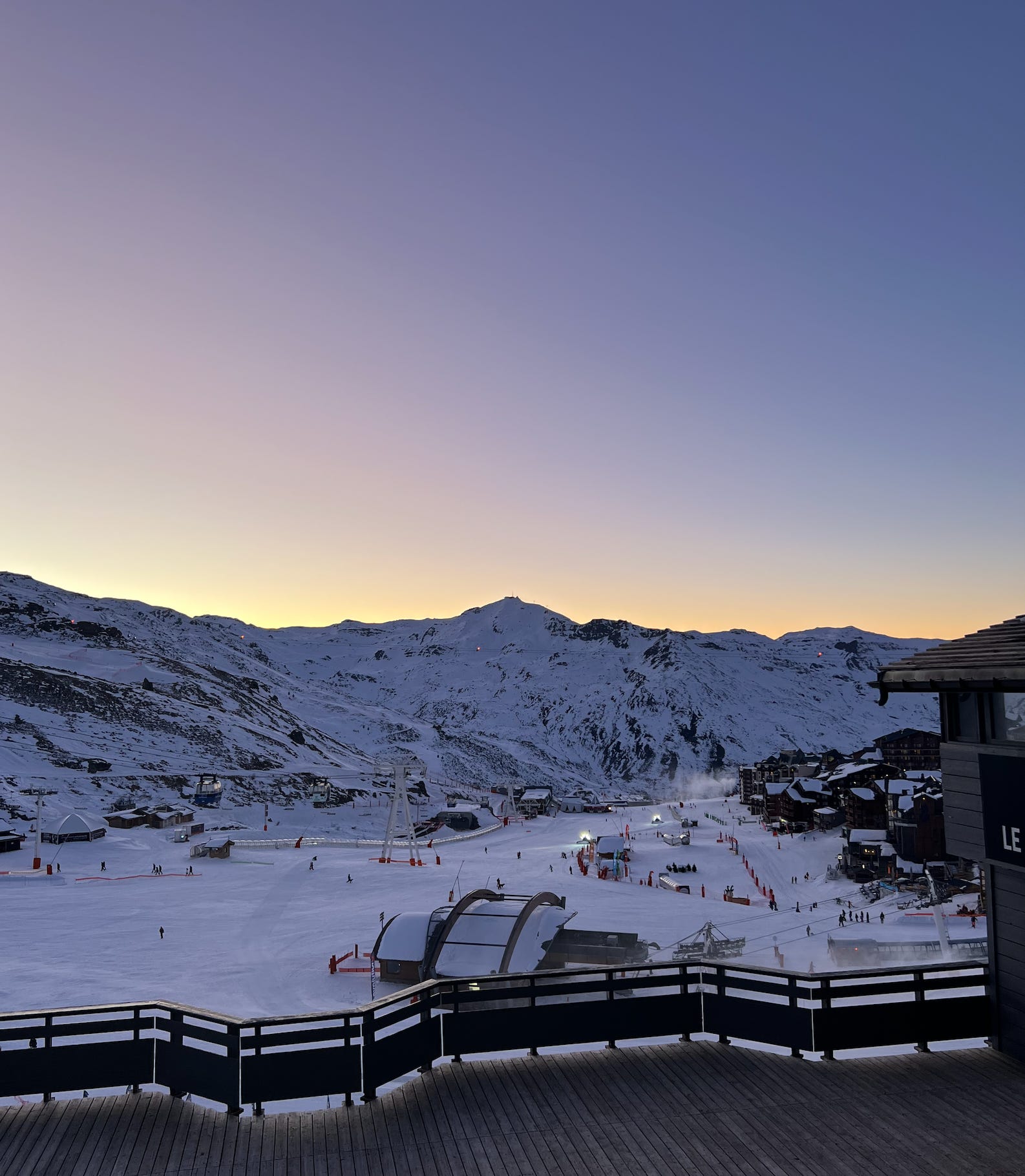
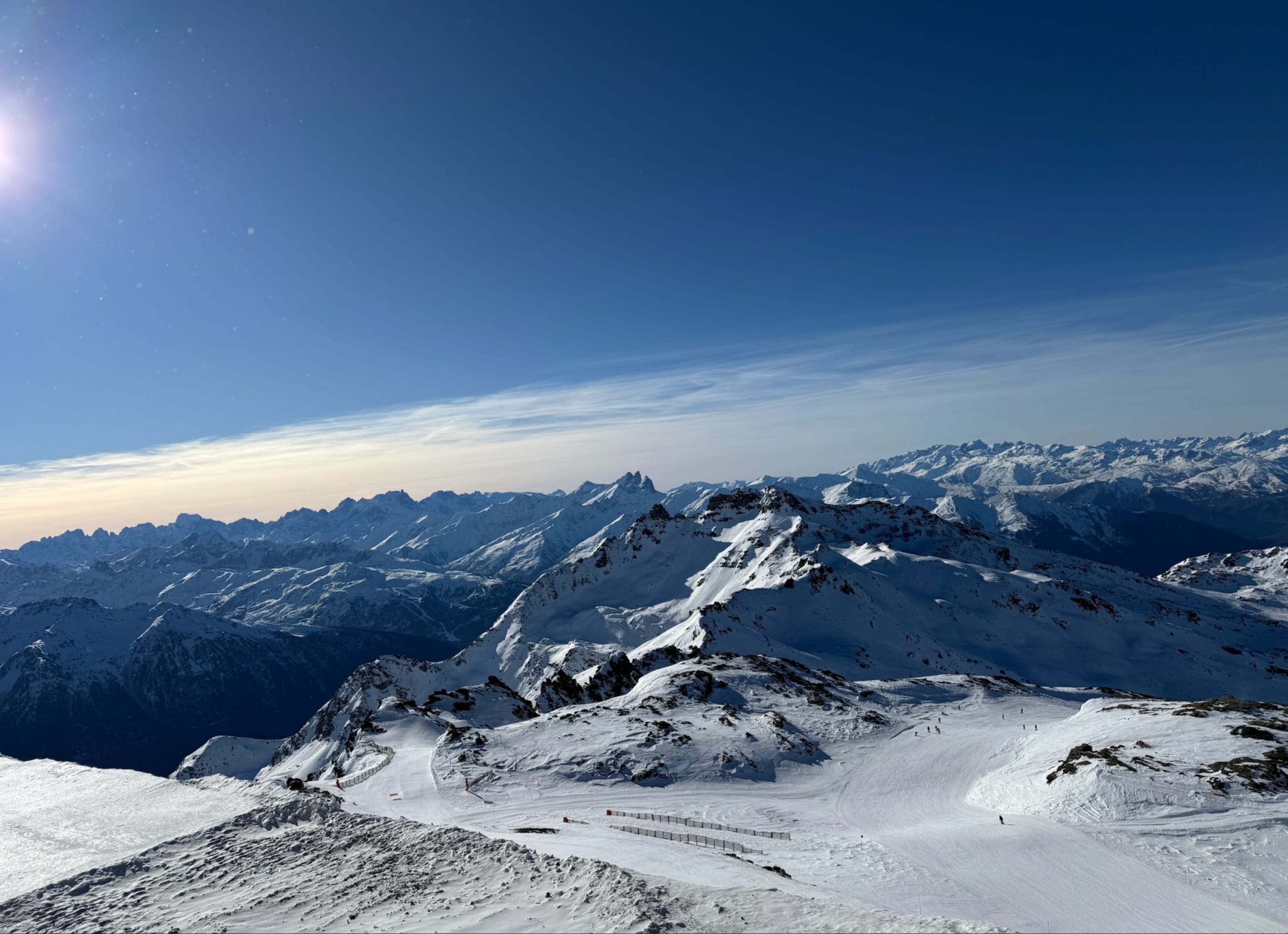
Anyway, 8/10 trip. Would have been 10/10 with better snow, but would do again. Most of my crew, who is flying KLM through Amsterdam, had their flights home delayed by a day (or two), which just sounds horrible. Air France has never failed me, so after a 4 hour stop in Paris, I’ll be back at JFK, then back in my bed, then back to the white collar labor force.
I hope you had a relaxing and/or fun holiday season. Let’s create some shareholder value in 2026.
Ideas I’m Thinking About:
What does the world look like when my kids don’t have to drive?
One of the more popular arguments in the tech world right now is, “who’s going to win the driverless war?” With pundits chiming in on Tesla, or Waymo, or perhaps Uber as a facilitator of a few different platforms that all offer driverless solutions. I neither know nor care which particular player is going to win, but it’s increasingly obvious to me that 1) “driver-less” is the superior form of car transportation for most passengers, and 2) it will almost-certainly be the de facto mode of road transit in the near-future. A few thoughts on why:
If you’ve never ridden in a Waymo, it is a life-changing experience. This isn’t hyperbole; when I visited San Francisco for the first time in December 2024, I ordered a Waymo from my hotel to the other side of town to check it out, and the ride was, quite literally, magical. My Spotify connected to the car’s sound system, and I watched, in awe, from the back seat as the steering wheel turned left and right with no operator assistance, and my car avoided jay-walking pedestrians, adjusted to sudden brake-checks from other vehicles, And maneuvered a four-point turn navigate a narrow alley, en route to my destination. Once I moved to San Francisco, Waymos became my default form of transportation as much as possible. Why? A few reasons. First, they were cost-competitive with Ubers and Lyfts. Obviously, if a Waymo cost $40, and an Uber cost $12, I would err toward the latter. But when they’re cost competitive, I’m taking the Waymo every time, because it minimizes randomness. Every time you order an Uber/Lyft, you face a few degrees of uncertainty. The car might smell like stale cigarettes or old food. The driver occasionally has their partner or friend in the front seat, and, if you have a group of ~4 passengers, they can’t accommodate you. Some human drivers are erratic behind the wheel, or they might text and drive. And, candidly, there are moments where I just want 20 minutes of peace without having to worry about small talk with another human.
When I’m in a Waymo, the car is always clean, I’m free to take phone calls (or even Zoom calls!) without having to worry who’s listening since I’m by myself, and all risks/uncertainty related to human behavior disappear. It’s just better. What’s shocking wasn’t how much better Waymos were than Ubers, but how seamless my adoption was: within a week of moving to San Francisco, I would check Waymo prices / times before opening other ride sharing apps. And judging from driverless growth rates, I’m not the only passenger who feels this way.
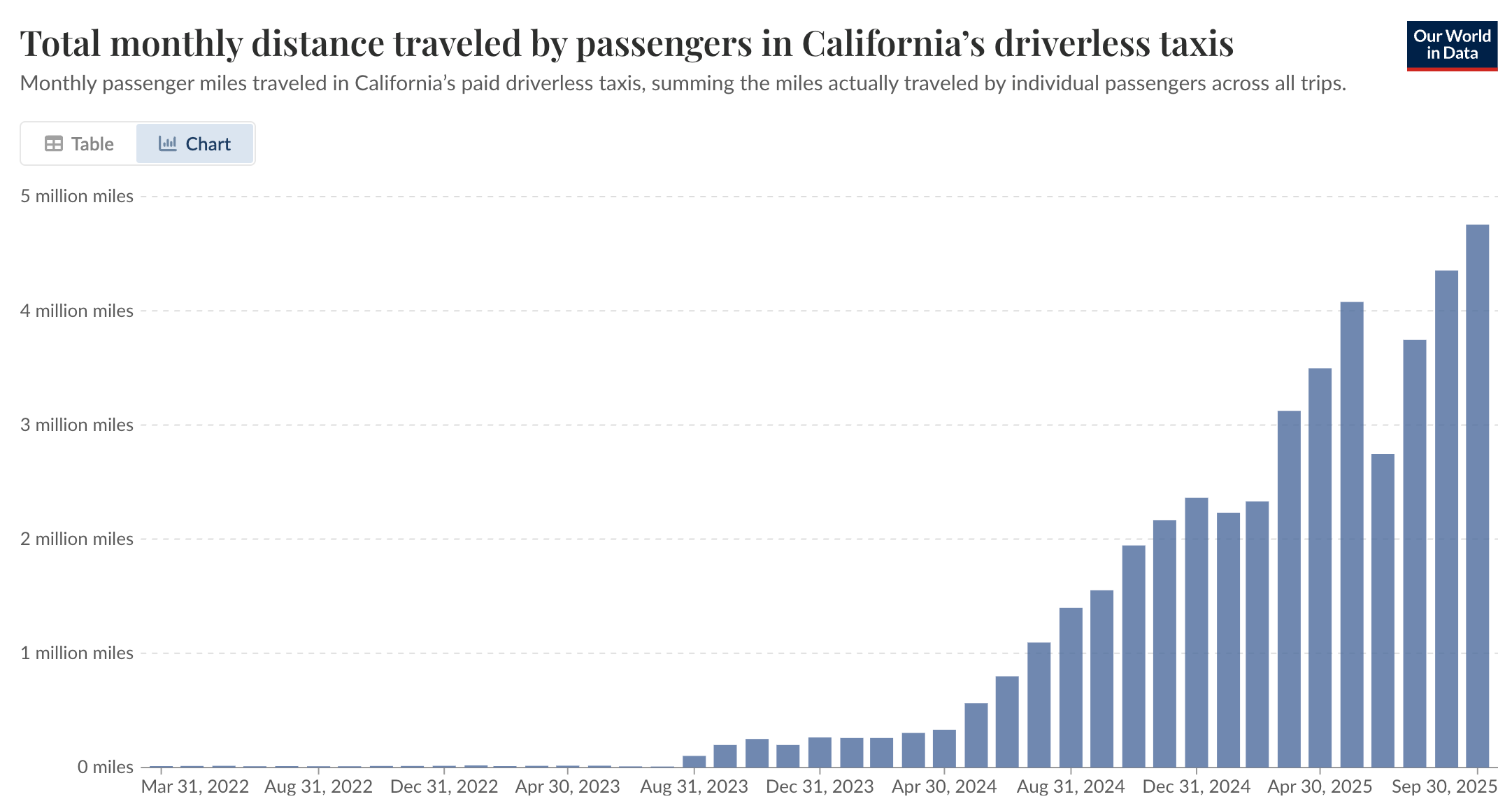
Tesla recently broke 7 billion full self-driving miles (up from 1.3 billion miles in April 2024), and monthly miles traveled in driverless taxis in California has jumped from ~200,000 miles in September 2023 to ~4.75 million in September 2025.
A few days ago, someone completed the first coast-to-coast autonomous car ride, proving that the whole length of the country is surmountable via driverless car, and Waymo is now active in 10 cities (Phoenix, LA, SF, Austin, Atlanta, Miami, Dallas, Houston, San Antonio, and Orlando) and growing, meaning that coverage gaps for driverless vehicles will, at some point, be a non-factor.
The question I have is “what comes next?”
Some immediate thoughts:
Suburban living becomes immediately more appealing for white collar city employees because driverless vehicles turn the commute into a viable work window. You obviously can’t “work” while driving, and even on public transit, you face logistic issues such as taking calls in public spaces, but when I’m in my little four-wheeled bubble of solidarity, I can get real work done. I’ve taken Waymo’s to my boss’s house in the suburbs from my apartment in San Francisco, and I could easily get my full “beginning of day” routine done in the car (check emails, update legal on deal documents, look through a company’s data room, etc.) in the ~hour ride with no interruption. If your commute is a viable part of your workday, you are far-less geographically limited on where you live.
Chicks leaving bars/clubs will never use cars with drivers again. Particularly at night, girls always face a risk that guys don’t: they have to be on their guard against creepy men. Every month, there’s a new horror story about a woman getting kidnapped / harassed / assaulted by a bad actor driver; driverless cars remove a risk category that has existed as long as cars have. If you’re presented with two similarly-priced options, but the first has a 0.001% chance of something really bad happening, and the second that has a 0% chance of something bad happening, you will obviously take the second, no?
Parking-related real estate becomes less relevant. Right now, driverless cars still face a supply issue that leads to long wait times. For example, I played in a basketball league in south San Francisco, about 25 minutes from my apartment via car. If the wait time for a Waymo was 20 minutes, I would opt to drive and look for parking upon arrival. Wait times are the primary friction point in areas where Waymo is active. But with a sufficient supply of driverless cars in a given geography that reduced wait times to, say, 3 minutes or less, a lot of current drivers would gladly opt to take a driverless cab. Driverless cars can continually operate until they need to be recharged / refueled, meaning that you move toward a world with less stationary vehicles taking up space near their owners’ locations, and therefore you need less parking spaces in general.
The rate limiter for long-haul rides becomes a vehicle’s battery: Driving is a fairly tiring activity, but presumably, I could, right now, take a self-driving car from San Francisco to Los Angeles and spend the entirely of the ride reading, writing, working, building a B2B SaaS slop application, etc, only interrupting the trip to 1) hit the restroom or 2) recharge / refuel the vehicle. For any medium-length trip in which you don’t want to deal with the hassle of airports, car rides in which you don’t have to drive become a legitimate alternative.
And rental cars are cooked? Whenever I head back to Georgia for the holidays, I typically rent a car from Hertz at the Atlanta airport before driving down to Tifton, Georgia to see my dad / dad’s side of the family for a few days, then I drove to Birmingham, Alabama to see my mom / mom’s side of the family, before returning to Atlanta to fly out. Those drives suck. Atlanta to Tifton is ~three hours, and there is almost always traffic. Tifton to Birmingham is ~five hours. Birmingham to Atlanta is ~two hours. And you have to worry about refueling the car. And not getting in a wreck. And what insurance do you want on your rental. And… you get the idea. The whole rental car process just sucks. If I could just call a Waymo to pick me up from each geography and take me to the next one, I would never rent a vehicle again. In five to ten years, this is almost-certainly a reality.
I guess my follow up follow up question is what commercial opportunities are there in a world where everyone is renting their robo-car instead of driving themselves? The obvious 101 answers are charging infrastructure and cleaning facilities to support growing autonomous fleets, but I’m open to any and all 201 thoughts.
What I’m Reading / Consuming
On Becoming “Legible to Capital” - Will Manidis wrote an interesting essay about the role that being “legible to capital” plays in firms’ successes that I think is particularly true in private markets. The thesis is effectively that any idea sufficiently legible to capital (which, in this case, can mean intellectual, social, and financial) develops a gravitational pull of its own in which it sucks in all of these forms of capital as they seek to play a role in enabling this idea/person/firm’s success. “Story” plays a role in legibility in that people have to care about your thing, or the story of what your thing will become, to be attracted to it. But “story,” in this case, isn’t marketing as much as it is a prophecy of the direction of the world and the role that you’ll play in it. “Legible to capital,” then, really just means a collective belief that you’ll be a winner in a particular arc of history, and those sources of capital want to be along for the ride. This legibility shifts over time, from being heavily story-weighted to more evidence-weighted as it attracts more and more capital. The way to make money, then, is either invest early (deploying capital in an idea before it’s legible, then profit from the “multiple-expansion” as that legibility develops), or throw the most money at an already-legible-but-still-growing business (I’ll bet $100m that this is the idea that matters).
The Mischievous Ex-Bankers Behind “Industry” - Fun profile by The New Yorker’s Rebecca Mead covering Konrad Kay and Mickey Down, the creators of the now-HBO hit: Industry. The duo met in college and both headed to investment banks right out of undergrad, but they were both notoriously-poor bankers who were quickly canned from the finance world. I’m a sucker for a good “underdog success” story (who isn’t?) and it was fun to read about how the duo took their experiences in London finance and built a world that now entertains millions.
Secrets of Sand Hill Road - For anyone interested in how the venture capital world works, Scott Kupor (managing partner at Andreessen Horowitz) wrote an excellent guide to all things Silicon Valley and startup investing. It’s an easy, but informative read for anyone new to (or simply curious about) the world of VC.
Anthropic has a set of courses on its site for how to use their API, Claude Code, MCP, etc. Pretty cool.
- Jack
I appreciate reader feedback, so if you enjoyed today’s piece, let me know with a like or comment at the bottom of this page!
You're "What I'm Reading/Consuming" section crushes!! Keep it up
I’m really excited for the future of driverless cars. I think the parking thing will make a huge impact in cities (making them more walkable, safe, and more enjoyable with less street parking, especially in NYC where cars can legally park way too close to the crosswalk). I think it’ll be huge for accessibility for groups that can’t drive their own personal vehicle due to disability, age, finances, or other things. Since I do hope the costs will continue to go down of getting a self driving uber (it should be cheaper than an uber with a driver, because we’re not paying the driver, over time)