

Welcome to Young Money! If you’re new here, you can join the tens of thousands of subscribers receiving my essays each week by adding your email here. And if you like my blog, you should pre-order my first book, Young Money, by clicking below:
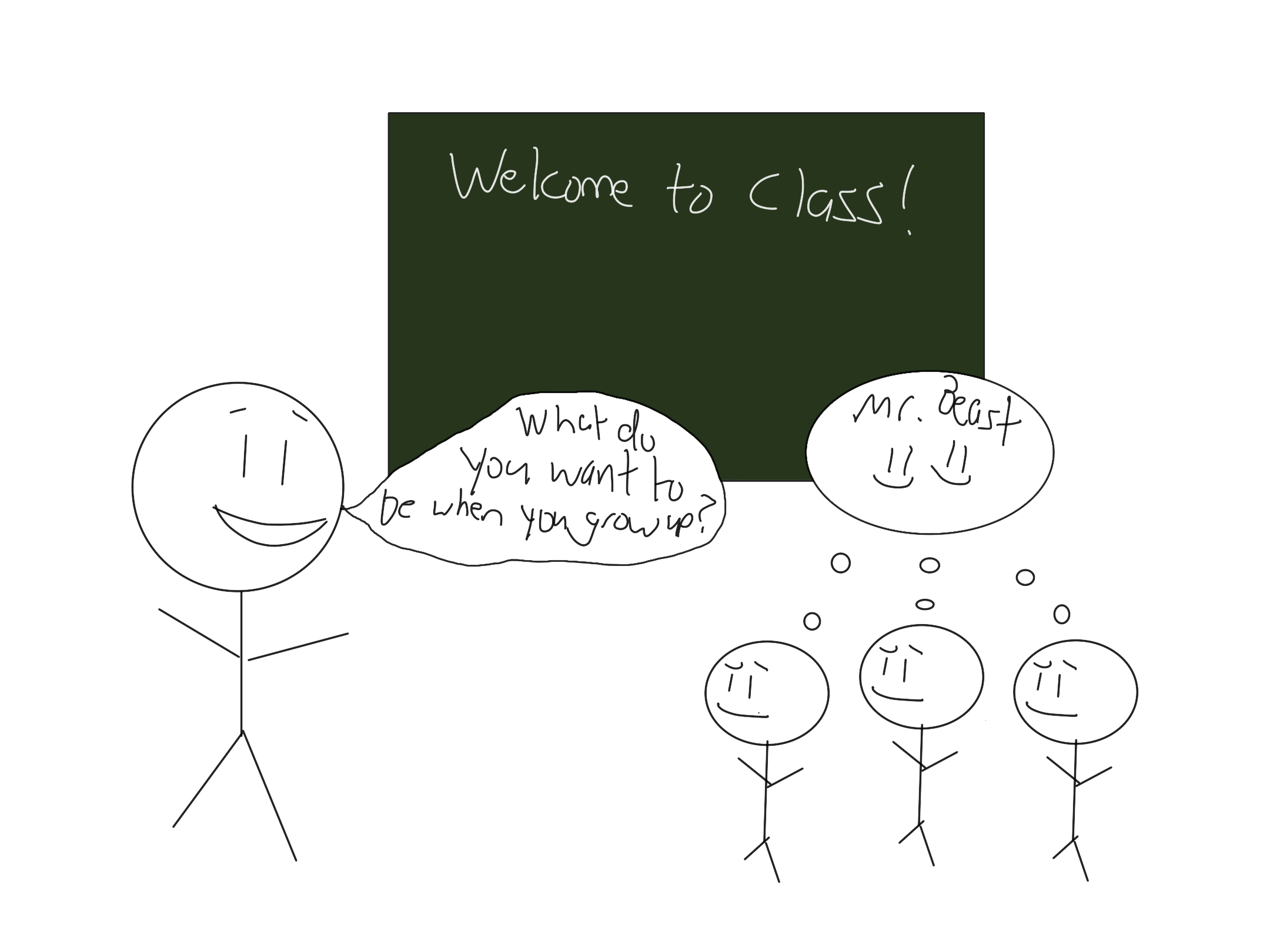
There was a window, from approximately November 2021 through August 2023, where I believed the only thing I wanted to do, or at least the primary thing that I wanted to do, was “write.” I have since changed my mind on this for a couple of reasons:
“Writing” for a living without any other activities surrounding said “writing” is a risky economic endeavor.
It’s incredibly difficult to “write” well without non-writing inputs that serve as inspiration for the words that end up on paper.
The writing thing worked so far as I landed a book deal (pre-order your copy, and I’ve made a ton of valuable connections and relationships downstream of this newsletter, Twitter, etc, but I also realized in my second year of business school that, yes, having a career that pays the bills while still having the flexibility to write would be a far superior set up than simply relying on writing to pay the bills. So now I’m a VC.
My original intention, believe it or not, wasn’t simply a misguided attempt at extended optionality or a stance against “normal careers.” It was actually rooted in sound economics. Three years ago, my newsletter had grown from 500 readers to 10,000 readers to 45,000 readers over the prior two years, and I went from charging nothing, to $1,000, to $2,500 for ads in my newsletter. Extrapolating those numbers, I could see a very plausible case to making over $500,000 a year with a 2x per week newsletter, plus book opportunities, speaking gigs, etc.
Again, not crazy.
Then some shifts happened: advertising rates fell and subscriber growth slowed as previously useful “growth hacks” on Twitter and LinkedIn became less effective. For two years I was simply writing, and then posting about the things I was writing, and the subscriber graph and revenue graph would go up. Those graphs subsidized a lot of fun shenanigans from the ages of 24 to 26. But when they slowed? I started to panic a bit.
“How do I make the numbers go up again?”
I started to further optimize my social media posts for what might more effectively drive new newsletter subscriptions. I had to cut my ad rates, or get creative in how I packaged ads, to keep the revenue coming in, as advertisers wanted better and better performance numbers. I started to second-guess what I was writing about to begin with. “Should I change up the topics?” “Should I stop running ads, and maybe paywall some of the content instead?”
The “get paid to write what you want” game got much, much harder in Q3 2023, and writing, as a result, became much less fun.
I’ve seen a stat floating around a few times now that says the most desired career path for Gen-Z and Gen-Alpha is to be an influencer or full-time content creator. I can tell you, from firsthand experience, that nothing drains the “fun” out of creating content faster than having your rent checks depend on advertisers’ generosity. That’s how you end up in a predicament called “audience capture.”
Something I didn’t realize in 2021 and 2022 was that monetizing social media, at that point, was quite “easy.” Substack was still pretty new. TikTok was still pretty new. Few people had figured out how to “hack” social media at scale, meaning that if your content (or marketing) was good, it just wasn’t that hard to build an audience, and, importantly, audiences still mattered in 2021 and 2022. A lot of this started to change around 2024, and in 2026, the “content” marketplace is cutthroat.
Cutthroat!
Let’s discuss the market participants in the social media economy today, vs. a few years ago:
2026:
Aspiring “influencers,” which are the legions of folks making lifestyle content and random short-form commentary, primarily on Instagram and TikTok. Oh, and there’s been a convenient uptick on Substack as well since the advent of ChatGPT. Coincidence?
Full time individual “creators,” who are churning out quality content on a daily or weekly cadence. They likely operate solo or with a small team. Kyla Scanlon is a good example.
Professional “creators,” who often have full production and content teams editing their clips and running their channels. Think Mark Manson, Jay Shetty, Mel Robbins, etc.
AI Slop, from Reels of animated fruits having affairs on Instagram to Substack “thought pieces” and Twitter “market insights.”
Clipping farms.
“Curated” content, which is almost-always stolen from other sources.
Media figures, desperately trying to adapt to a social media-first internet that neither cares about paywalls nor has attention spans lasting longer than 5 seconds.
Oh, and your “follower count” doesn’t matter any more, because every platform’s newsfeed is determined by algorithms.
Even four years ago, algorithms just didn’t have the same influence over newsfeeds, far fewer people were serious creators, “clipping” wasn’t a thing, and ChatGPT had not yet launched. There was just way less noise in the newsfeed, making your content, as a random poster, far more visible. But since 2024, there’s been an explosion of content thanks to the following factors:
serious players putting serious resources behind content creation
more and more young people viewing “influencer” as an aspirational career path and thus joining the algorithmic hunger games
AI removing all friction from content creation
The perceived importance of building a “personal brand” continuing to increase
Clipping becoming a viable marketing strategy
Humans only have so many hours in the day, and only some subset of those hours can be spent on social media. If the internet is producing 10x more content than it was 4 years ago, and we’re spending the same amount of time online, your content is now 10x less likely to be seen, absent other variables such as improved engagement hacks or higher volume.
The result: “making it” as a content creator (or, at least, a content creator who makes a living strictly from the monetization of content itself) is a total slogfest.
If you’re trying to make it as an indie creator living off brand deals or subscriptions in 2026, you’re putting yourself on a treadmill against well-funded “teams” working behind the scenes for big-name creators, “influencers” who take increasingly extreme actions to capture increasingly-fleeting attention, and a proliferation of AI slop and clipping farms.
How is anyone going to find you, let alone listen to you? Now add the pressure of tying your livelihood to your ability to get eyeballs, and, well, you get the idea.
The worst part of this development is that most content in 2026 just doesn’t matter.
In 2016, TikTok didn’t exist, Twitter was where famous people shared their random 140-character brain blasts, Instagram was home to your friends’ beach photos, Youtube was a recreational wonderland of entertaining and educational videos, and most “bloggers” turned to Medium, or personal blogs hosted on Wordpress. Social media was, basically, a place to keep up with your friends (Instagram), learn something new or laugh at something stupid (YouTube), or break the news (Twitter).
But now?
Every platform is extracting from their audience rather than serving them. What’s the optimal ad load we can hit someone with without them churning? Short-form video has proved to be a digital fentanyl that can keep us scrolling for hours. Stretched truths garner far more attention facts, so those are going to be amplified, because, again, more time on screen = more ad revenue.
And the content creators themselves, in desperate bids to “keep up with the times,” are just as guilty, turning to more and more aggressive strategies for “hooking” a viewer so they too can make a living by monetizing this engagement with ads.
The result: very little content on the internet is “good,” as the entirety of the internet, from platforms to posters, is now optimized for engaging viewers where they are: passively scrolling for hours a day. Quality is sacrificed for the sensationalistic and the absurd, as anything that’s actually quality takes time to create, and the only way to stay top-of-mind is by churning out more and more content as quickly as possible. And we wonder why 99% of the timeline is ephemeral slop.
If you’re reading this, you probably spend 2+ hours per day on social media. Can you remember five Reels or TikToks you’ve watched in the last month? I can’t think of three, though I know I’ve watched hundreds, if not thousands, since May 1st.
I could tell you dozens of books, YouTube videos, and blog posts that I’ve found interesting. Even a few tweets, as I think the written word does have a bit more sticking power than slop videos, but certainly not a short-form video. Slop in, slop out. And yet, all platforms are pushing short-form videos more than ever, because they’re more engaging, as they require 0 cognitive effort from the viewer. As a result, the entirety of social media’s “content economy” is incentivized to generate performative engagement bait with little thought given to the underlying substance, because engagement bait sells ads.
If you’re an aspiring “content creator” today, you have to win this treadmill, churning out new content day after day that everyone “sees” (if you’re lucky), but no one processes.
Now, all of this isn’t to say that social media, or posting, isn’t valuable. Frictionless connection to the entirety of the human population is, of course, ridiculously powerful, but you need to know what you want to get out of that connection. Fighting the uphill content mill battle certainly isn’t it. At best, you’ll produce mediocre brainrot on a daily basis. At worst, no one will see anything you make.
The only way to make content “work,” economically speaking, in 2026, is to either produce a limited number of generational work(s) then log off the site, or become known for “one” thing and proceed to post about it in a million ways. A few examples of this:
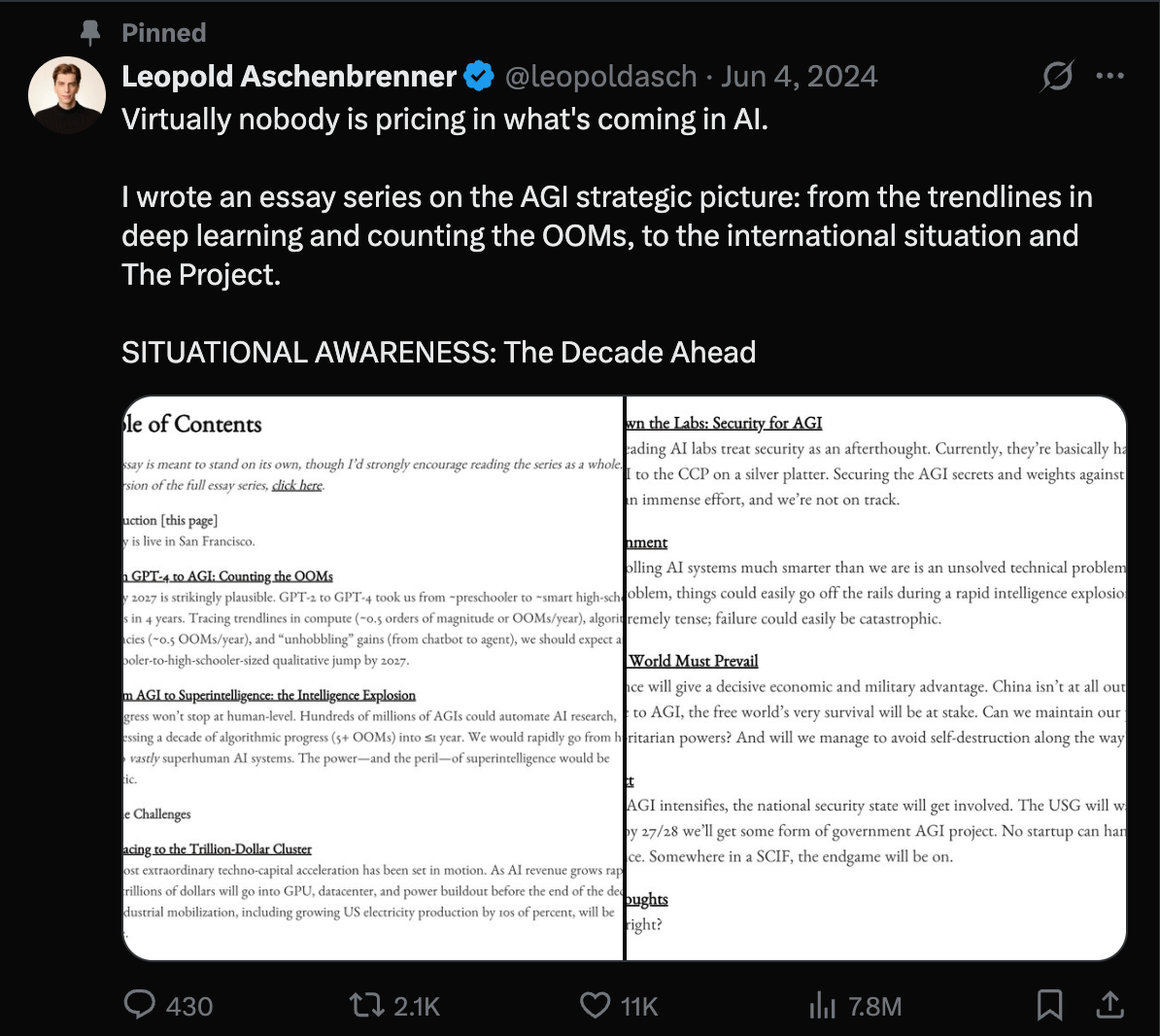
The hottest hedge fund in the world right now is the San Francisco-based “Situational Awareness,” run by former OpenAI researcher: 24-year-old Leopold Aschenbrenner. Two years ago, Leopold published a 165-page manifesto on the ramifications of AI technology and how one might profit by investing the AI buildout. Through the first 6 months of 2025, his fund was up 47%, and by August of that year, Leopold was managing $1.5 billion.
Leopold has tweeted three times in the last year. His pinned tweet, which includes screenshots of his manifesto with a link to the full document, has 8,000,000 views and 11,000 likes. That manifesto kickstarted his now multi-billion dollar fund.
Another example: James Clear, the author of Atomic Habits. Go scroll through Clear’s Instagram page, and you’ll see screenshot after screenshot of quotes from his book or curated pieces of wisdom which he also shares in his newsletter. Every single thing he posts points back to the only thing that matters: the book.
One last example: Bryan Johnson, aka the “don’t die” guy. I mean, look, no one has hammered a brand harder than Johnson has hammered the anti-aging/health-maxxing trend. He live-tweeted his experience taking shrooms with his assistant-turned-girlfriend, before live-tweeting from his assistant-turned-girlfriend’s ultrasound appointment for her nether regions. He have live-tweeted the number of erections he has each night as proof of his healthy libido. He hasn’t missed an opportunity to post a witty quip about his sleep score in two years. And his business is crushing it as a result.
Three different ways to get a bag from your content: scarce sharing of something truly novel and rare (Situational Awareness), repeated distribution of a killer idea (Atomic Habits), or scorched earth brand building with economic upside (Bryan Johnson). The “I’m going to monetize my content by posting a lot” game just doesn’t work anymore in 2026, and if you try to play that, you’ll almost certainly fall victim to audience capture.
In the best case scenario, you become an “AI influencer” to chase whichever venture-backed startups’ marketing budgets you can pillage before they go to zero (at the expense of audience trust and respect, of course). At worst, you risk throwing away your real life for engagement in your fake one. One example: this kid “Big John Golfs“ on Instagram.
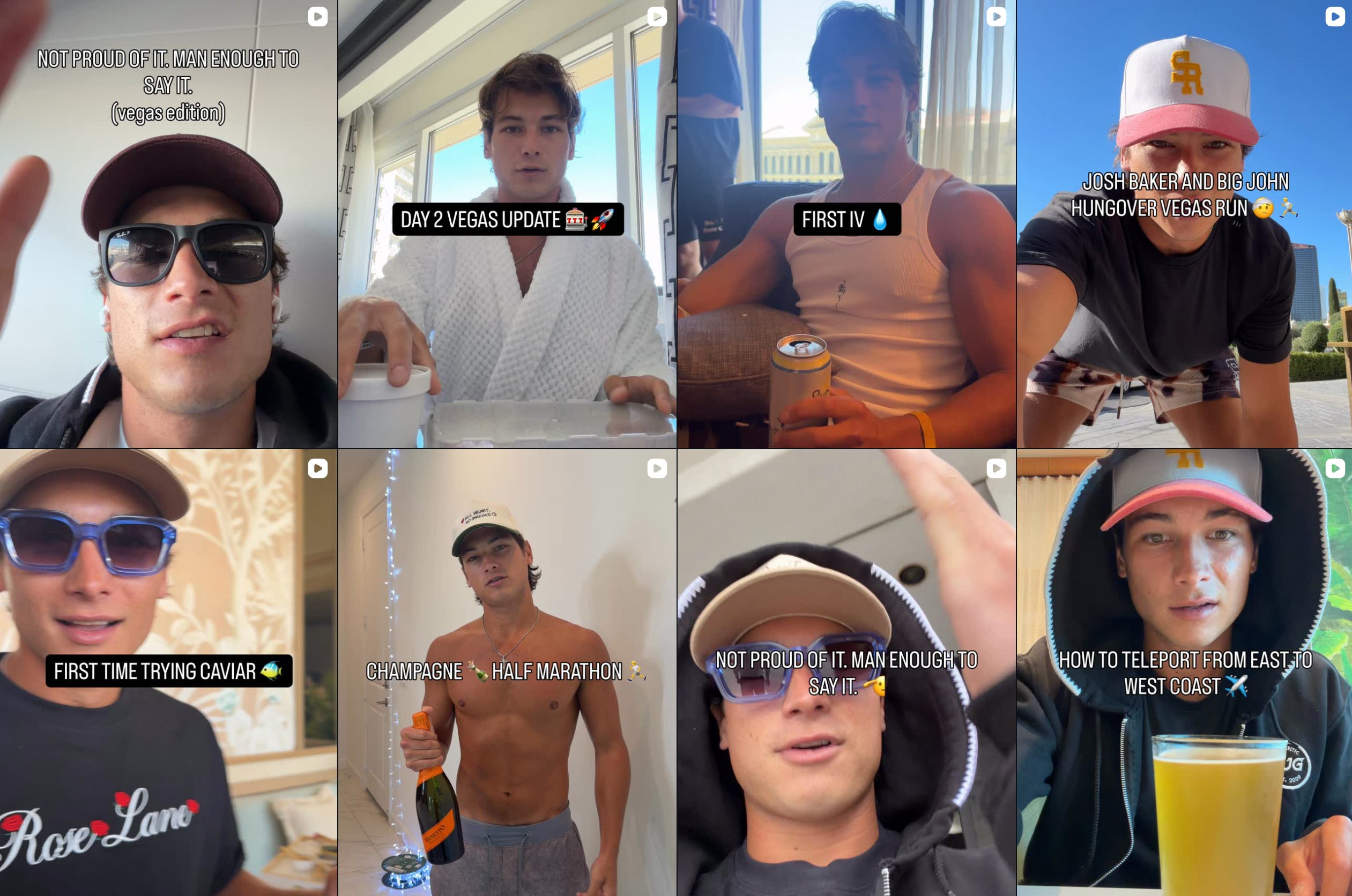
His content is, objectively, hilarious. He blew up for making videos of himself ripping a bong or chugging several beers before running eight miles, and his antics have only grown more ridiculous as his audience ballooned to 700k+ followers. But now, because his audience was built on degeneracy, the only way to keep the gravy train going is, as you guessed to double and triple down on that degeneracy. Most recently, he gave us a play by play of his bender in Vegas.
Again, incredibly entertaining content, but he’s also speedrunning a spiral to rock bottom for the sake of an internet audience. Which, as a viewer, I appreciate. But it’s probably not great for his longevity.
That’s not to say there’s not room, or a market, for “recreational content creation.” In fact, I don’t think there’s ever been a better time to “make good content.” Just don’t expect to rely on “good content” for your paychecks in a world of short-form slop.
Casey Neistat is my favorite YouTuber; he’s a consummate professional and total craftsman. He also used to post all. the. time. He was a machine. Then the cadence slowed to a few videos a year. Starting a few months ago, he’s been posting 1-2x per week. And the videos are really, really good.
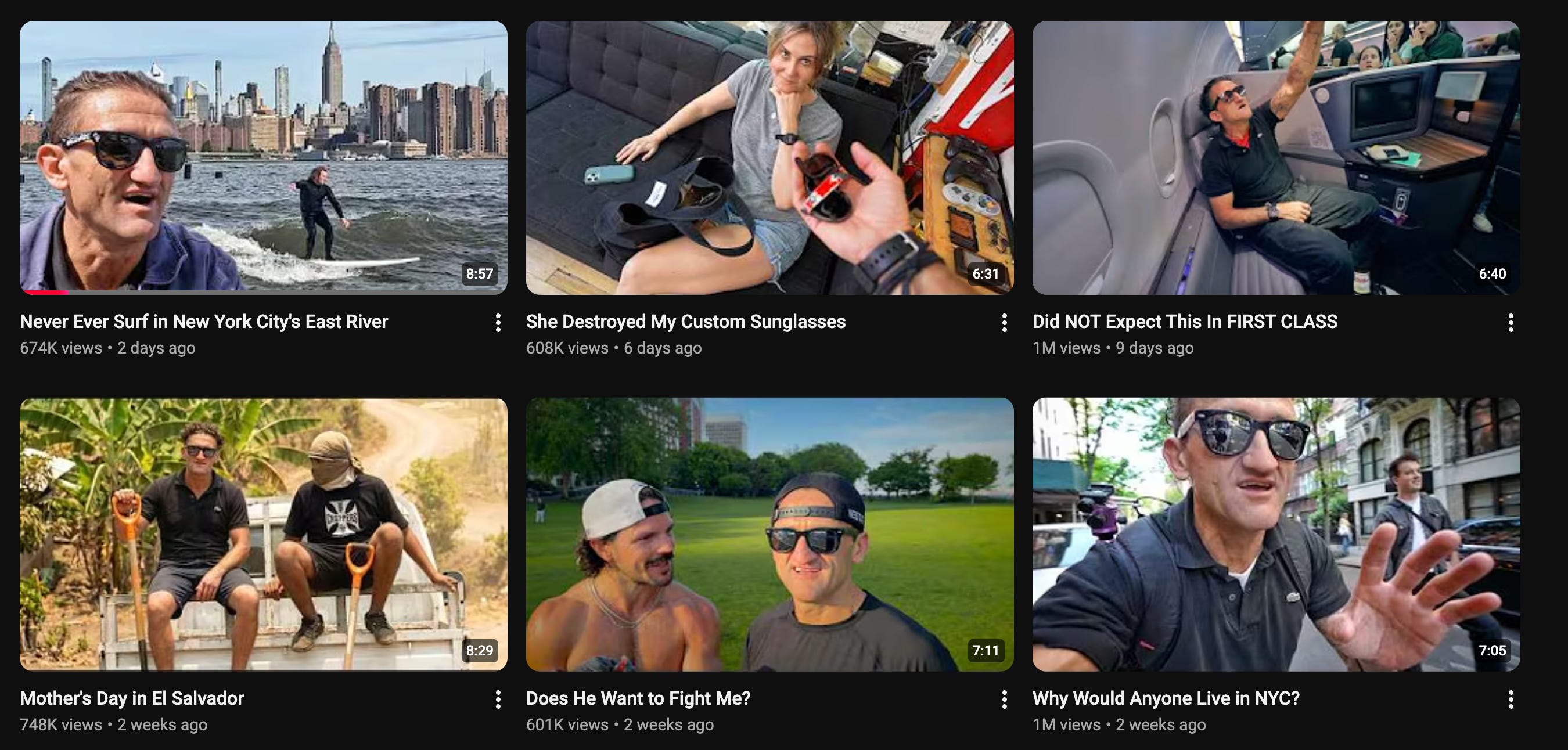
In his last video, he noted that he deleted social media from his phone so he can spend less time scrolling, and more time creating. Specifically, he noted that removing social media was huge for just allowing him to “focus” on the task at hand again. It’s not a coincidence that as soon as he ditched IG and TikTok, his YouTube game exploded. It’s hard to make anything quality when you’re constantly plugged in to the short-form dopamine machine.
Young people aspire to be influencers. Social media prioritizes short-form videos. As a result, countless young folks are trying to “win” the social media game by churning out Reels and TikToks day after day. Making content they don’t particularly want to for audiences that don’t particularly want it, all in an attempt to monetize their “engagement” with brand deals while the platforms themselves make billions by pumping ads after every third video.
I think we all have better things to do than create and consume short-form slop every day until we die. Make good things for the sake of making good things, don’t make slop for the sake of a few clicks. Less TikTok, more Casey Neistat.
- Jack
I appreciate reader feedback, so if you enjoyed today’s piece, let me know with a like or comment at the bottom of this page! And make sure to pre-order my first book, Young Money, by clicking below:
spot on - why ive always had a sort of "day job" with my training business. helps me approach the creative work with the right long-term stance without needing to post sloptweets
Interestingly, a 2026 yahoo/yougov poll reports a major drop in GenZ influencer-aspiration (now only 5% from 57%). I guess the fatigue got to us faster than we thought.